
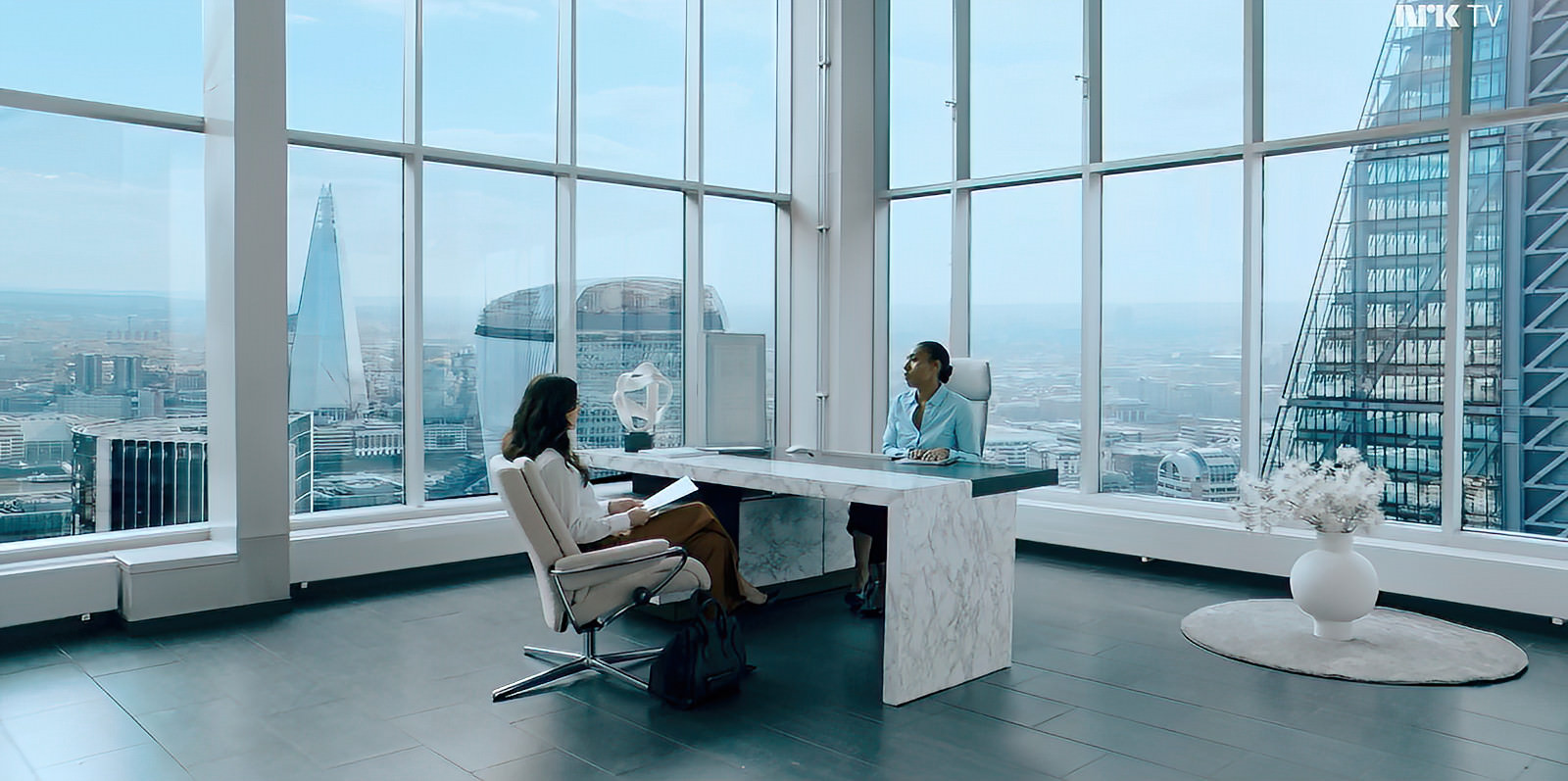
What is a virtual production backplate?
Virtual production has changed the way film, television and music video are made. Rather than sending a crew on location or building an expensive physical set, productions increasingly use LED volume stages: large curved screens on which photographic or digital backgrounds are displayed behind the actors.
A backplate is the background image displayed on that screen. When it works well, the audience sees a convincing real-world environment behind the action. When it doesn’t, the background looks flat, pixelated, or unconvincing on camera.
The difference between a backplate that works and one that doesn’t comes down almost entirely to resolution.
Why resolution is everything
A camera pointed at an LED volume screen is effectively photographing a photograph. Any limitation in the quality of the backplate image becomes visible on screen, and modern cinema cameras are unforgiving. If the backplate doesn’t contain enough detail, the background will look soft or artificial the moment the camera moves, reframes, or pushes in.
This is why gigapixel and ultra-high-resolution panoramic photography is particularly well suited to virtual production. A gigapixel cityscape contains far more information than any standard photograph. The production team can reframe extensively, move the virtual camera, or push in on a specific area of the background, and the image holds its quality throughout.
For wide panoramic backgrounds, the field of view also matters. A gigapixel panorama can cover a much wider angle than a standard photograph, giving the director far more flexibility in how the scene is framed and lit.
What makes a good backplate shoot
Shooting backplates for virtual production is a specialist discipline, distinct from conventional location photography. A number of factors determine whether the final image will work on an LED volume stage.
Time of day and light consistency. A backplate stitched from multiple frames needs consistent light across the entire image. This means shooting at times when the light is stable: early morning, dusk, or overcast conditions. Dramatic lighting can work beautifully but requires careful management across the full panoramic sweep.
Resolution and file size. The final file needs to be large enough to fill the screen at full resolution with room to reframe. For large LED volumes this means gigapixel-scale files: images stitched from dozens or hundreds of individual frames.
HDRI data. Many virtual production pipelines also require High Dynamic Range Image data captured at the same location and time as the backplate. This is used to light the virtual environment and the actors consistently with the background. I shoot HDRI data alongside backplates as standard where required.
Minimal movement in the scene. A stitched panorama requires the scene to remain largely static during the shoot. For city locations this means careful timing to minimise traffic, crowds and movement that would create stitching errors in the final image.
Some of the productions I have shot backplates for
Netflix: The Woman in Cabin 10 I shot the London skyline panorama that appears through the windows of The Guardian’s offices early in the film. The brief required a specific viewpoint, a specific time of day, and a file large enough to fill the production’s LED volume convincingly.
Sky News Westminster Studio The Sky News channel relocated to Westminster and required a permanent backplate for the LED volume behind the newsreaders. The brief was a wide panoramic view of the London skyline from a Westminster viewpoint, shot to match the studio’s specific screen dimensions and aspect ratio. The backplate now appears on screen daily.
Both projects required bespoke shoots rather than licensed existing images, though my archive of existing gigapixel panoramas is also available for productions where an existing image fits the brief.
London and international locations
My core archive of backplates covers London extensively, with panoramic cityscapes shot from numerous vantage points across the city at different times of day and in different conditions. Many of these locations are not publicly accessible and cannot be replicated.
I also shoot internationally and have an archive of images from cities including Shanghai, Dubai, San Francisco, Chicago and Abu Dhabi, as well as landscapes across the USA and Europe.
For productions requiring a specific location not covered by the existing archive, I am available for bespoke commissions worldwide.
Working with productions
I work directly with production companies, VFX supervisors, set designers and directors of photography. For backplate commissions I am happy to work from a technical brief specifying screen dimensions, aspect ratio, field of view, and lighting requirements.
Existing images from the archive are available for licensing on a Rights Managed basis. Bespoke shoots are quoted on a project basis.
If you have a production requiring backplates, please get in touch with details of your brief.